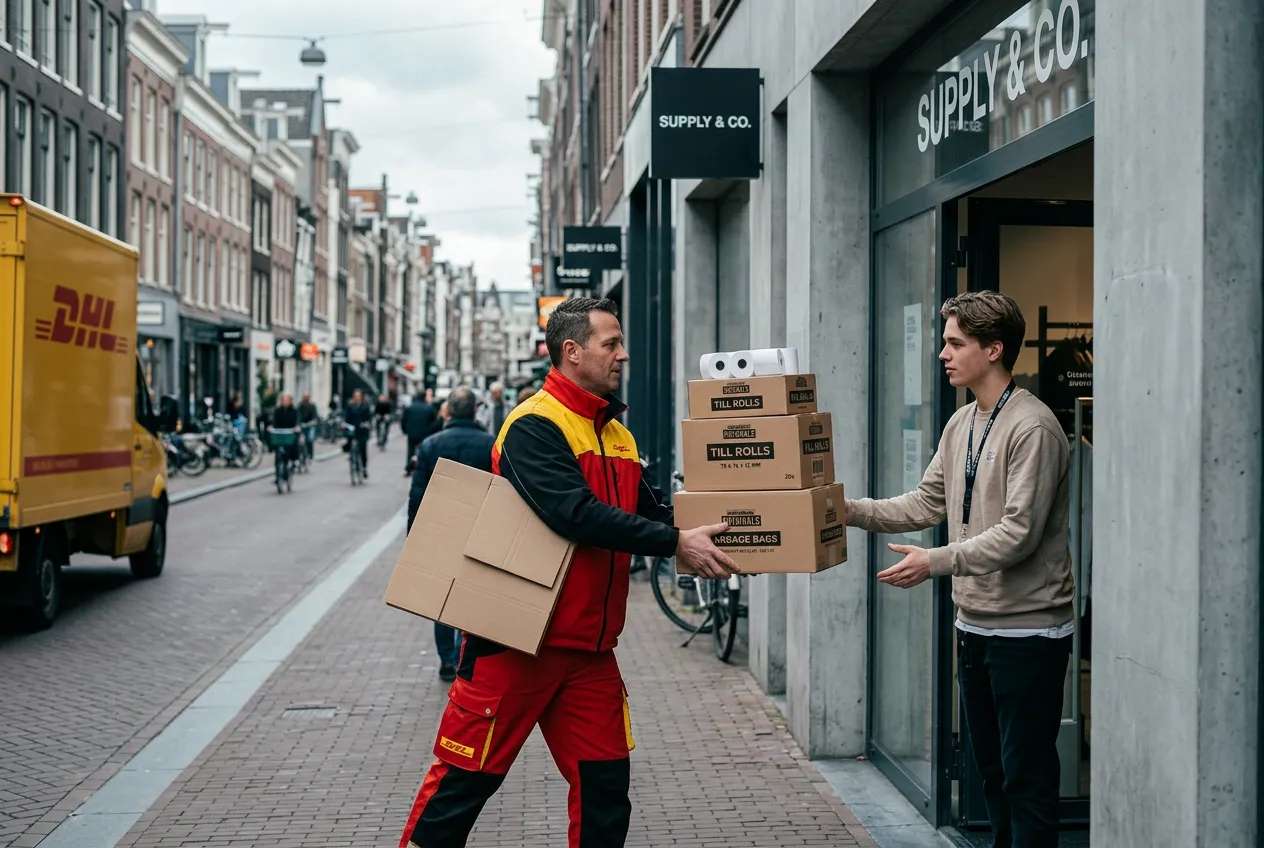

On paper, store replenishment is arguably the simplest concept in retail. You put the right product in the right place at the right time. Yet, in practice, it is precisely where retail operations most frequently break down.
The failure is rarely dramatic. It happens quietly. A store is slightly understocked for a busy weekend. A delivery arrives a day late. A vital consumable runs out mid-shift, forcing staff to improvise and lose focus on the customer. I view this not as a logistics issue, but as a systems problem. Operations teams often treat these moments as isolated incidents to be managed. They are not. They are symptoms of an inherited system that compounds inefficiencies over time, costing retail organisations far more than they realise.
Having seen this exact pattern play out across dozens of major retail setups, I know that these mistakes are entirely preventable. Fixing them starts with understanding how your replenishment cycle is actually functioning, rather than how you assume it works.
What replenishment efficiency actually means
Before we can fix a broken replenishment system, we must define what an efficient one does. People often confuse replenishment efficiency with delivery speed. True efficiency encompasses the entire cycle, from the initial demand signal to the moment a product sits available on the store floor.
This cycle relies on five distinct gears: forecasting accuracy, stock model design, supplier reliability, lead time management, and last-mile delivery to the store level. Retail organisations frequently attempt to optimise one or two of these elements in isolation. They negotiate faster shipping or buy a new forecasting tool, then wonder why the overall system still underperforms.
All five components must work together. If your forecasting is perfectly accurate but your supplier lead times are erratic, the system fails. If your supplier delivers on time but your store receiving process is chaotic, the system fails. Every component must align, because a weakness in any single area creates operational drag across the entire chain.
The structural failures you probably recognise
When I onboard new clients and diagnose their existing operational setups, I rarely find unique problems. Instead, I see the same structural failures recurring across different brands. Processes do not fail on their own. People design them, inherit them, or neglect them. Here is where the breakdown usually happens.
Fragmented supply bases
Too many suppliers with inconsistent lead times create unpredictability that no amount of buffer stock can fully absorb. When store managers have to track multiple deliveries from different vendors throughout the week, administrative load increases and the margin for error widens.
Forecasting on historical orders, not consumption
Many procurement teams base their forecasts on what stores ordered last year, rather than what those stores actually consumed. Ordering what was ordered before simply replicates past mistakes, baking previous stock-outs and overstocking events into your future supply plan.
The shop floor blind spot
Central procurement often makes replenishment decisions without real-time data from the shop floor. When head office lacks visibility into actual store-level inventory, they operate on assumptions. This disconnect leads directly to emergency orders and expedited shipping costs.
Reactive stock management
A surprising number of retail networks run on reactive stock management. They respond to stock-outs rather than preventing them through pre-financed inventory buffers and accurate forecasting models. Firefighting becomes the standard operating procedure.
Unscalable manual workflows
Retailers frequently rely on replenishment workflows built during their early growth phases. A manual ordering process that functions adequately for ten locations will inevitably crack under the pressure of fifty or a hundred stores.
How to diagnose your operational setup
Before you can fix a replenishment problem, you need to know exactly where in the system the breakdown is occurring. You need a practical diagnostic framework
Map the end-to-end cycle
Start by mapping the full replenishment cycle from end to end. Document the exact moment a product is consumed in store to the moment it is physically replaced. Note every step, every handoff, and every system involved. You will quickly spot the redundant steps and communication gaps.
Locate the friction
Identify where the delays and errors concentrate. Is the problem originating in the forecast, the order processing, the supplier's warehouse, the transit phase, or the store receiving process? Pinpoint the exact bottleneck.
Measure first, analyse second
Measure what you can and estimate what you cannot. Even rough data is vastly superior to an assumption. My LEAN background dictates a strict sequence here: measure first, analyse second, improve third. Without baseline data, any operational change is simply a guess.
Ask the people on the floor
Speak directly to your store teams. The people unpacking the boxes often know exactly what is broken and why. They have usually been working around the same systemic problem for months, developing quiet workarounds that head office never sees.
What operational reliability looks like in practice
What happens when you actually align these gears? You get a highly functional operational reality, not an abstract theory.
Stores never run out of essentials. Delivery schedules become so reliable that store teams can set their watch by them, allowing them to schedule staff efficiently for receiving and restocking. Stock models adapt to actual consumption data, smoothing out peaks and troughs in demand. Your central team stops firefighting and spends its time optimising the network and planning for future growth.
This level of precision requires deliberate design, but it is entirely achievable. Within Worldpack’s internal operations, we maintain a 98.8% DIFOT (Delivery In Full On Time) rate and 99.62% stock availability. We achieve these figures because we treat GNFR supply as a tightly controlled, highly measurable system.
The role of a systemic supply partner
A reliable supply partner does more than drop boxes at a loading bay. They bring structural knowledge of how replenishment systems work at scale.
When we onboard a new client, my first priority is understanding their operational reality before we make a single delivery. A systemic supply partner builds the supply model around your actual store consumption, helping you transition from a reactive purchasing habit to a proactive replenishment strategy. They integrate with your systems, simplify your ordering workflows, and consolidate your deliveries to reduce friction at the store level. The right partner absorbs your operational complexity so your store teams do not have to.
Designing a better way forward
Replenishment efficiency is a design problem. Most retail operations were never consciously designed. They evolved. An ordering process built for ten stores gets stretched to fifty, then a hundred. Evolved systems accumulate inefficiencies that compound quietly until they become impossible to ignore.
Retailers who take replenishment seriously — those who treat it as a deliberately designed system rather than an inherited process — operate more reliably, scale more cleanly, and carry significantly less operational risk.
You can fix your replenishment cycle. The diagnostic tools exist. The first step is simply sitting down, looking at the data, and being honest about where your current system is breaking down.